
Malignant lymphoma treatment: Types and modern treatment methods
- Risk factors for lymphoma
- Symptoms of malignant lymphoma
- Diagnosis of malignant lymphoma
- Malignant lymphoma treatment methods
- Helios expertise in lymphoma treatment
The lymphatic system is part of the body’s immune system. It includes the lymph nodes and lymphatic vessels, as well as the spleen, bone marrow, and other lymphoid tissues. Lymphocytes — a type of white blood cell — play an important role in this system by helping the body recognize and fight infections.
Malignant lymphoma develops when certain lymphocytes begin to multiply uncontrollably. Cancerous cells can accumulate in the lymph nodes, causing them to enlarge, and may also affect the bone marrow, spleen, and other organs. This is why lymphoma does not always present solely as swollen lymph nodes.
There are many different types of lymphoma, which can vary considerably in how quickly they develop and how they are treated. In general, lymphomas are divided into Hodgkin lymphoma and non-Hodgkin lymphomas. Non-Hodgkin lymphomas can be further classified as slow-growing (indolent) or aggressive. Accurately identifying the type of lymphoma is essential for selecting the most appropriate treatment and assessing the prognosis.
Risk factors for lymphoma
The exact causes of malignant lymphoma are unknown in most cases. The disease develops as a result of changes in lymphocytes that cause them to multiply uncontrollably. However, several factors are known to increase the risk of developing certain types of lymphoma.
These include a weakened immune system, for example after organ transplantation or in certain immunodeficiency conditions, as well as some autoimmune diseases. An increased risk of certain lymphomas is also associated with infections, including Epstein–Barr virus (EBV), HIV, hepatitis C virus, and Helicobacter pylori. Risk can also vary with age and depends on the specific type of lymphoma.
Genetic predisposition may also play a role. The risk of certain types of lymphoma is slightly higher in people whose close relatives — parents, siblings, or children — have had lymphoma or other blood cancers. In addition, an increased risk may be associated with rare inherited syndromes that affect immune function and DNA repair mechanisms. However, these conditions are uncommon, and most lymphomas develop without an identifiable hereditary cause.
Having one or more risk factors does not mean that a person will necessarily develop lymphoma. Many patients develop the disease without any known risk factors.
Symptoms of malignant lymphoma
The symptoms of lymphoma can vary considerably depending on the type of disease and which organs or tissues are affected. One of the most characteristic signs is painless swelling of the lymph nodes, most commonly in the neck, armpits, or groin. Enlarged lymph nodes may persist for a prolonged period and gradually increase in size.
Lymphoma may also cause so-called B symptoms: unexplained fever above 38°C, severe night sweats, and unintentional loss of more than 10% of body weight within six months. These symptoms are relevant not only for diagnosis but also for determining the stage of certain types of lymphoma.
Other possible symptoms include persistent fatigue and weakness, itching, loss of appetite, and increased susceptibility to infections. If the disease affects organs outside the lymph nodes, symptoms depend on the location. For example, involvement of lymphatic tissue in the chest may cause coughing, shortness of breath, or a feeling of pressure, while involvement of the abdominal cavity may lead to pain, a feeling of fullness, or abdominal swelling.
These symptoms do not necessarily indicate lymphoma and can occur with many other conditions. However, persistent or unexplained swelling of the lymph nodes, particularly when accompanied by B symptoms, should be evaluated by a doctor.
Diagnosis of malignant lymphoma
When lymphoma is suspected, diagnostic testing is aimed not only at confirming the disease but also at accurately determining the type of lymphoma and the extent of its spread. This is particularly important because different types of lymphoma can vary considerably in their clinical course and treatment approaches.
The diagnostic process usually begins with a medical history and physical examination. The doctor assesses enlarged lymph nodes, examines the liver and spleen, and asks about characteristic symptoms. Further examinations may include:
- Blood tests — help assess blood cell counts, organ function, and certain markers of disease activity, including lactate dehydrogenase (LDH) levels.
- Biopsy of a lymph node or other affected tissue — is the key method for confirming the diagnosis. The tissue sample is examined under a microscope to determine the type of tumor cells.
- Immunohistochemical and molecular genetic testing — helps identify the exact subtype of lymphoma and detect biological characteristics of the tumor cells that may, in some cases, influence treatment decisions.
- Computed tomography (CT) and PET/CT — are used to determine the location and extent of the disease. PET/CT is particularly important for many types of lymphoma and may also be used to assess response to treatment.
- Bone marrow examination — may be performed to determine whether the lymphoma has affected the bone marrow. It is not required for every patient and is recommended depending on the type of lymphoma and the results of other examinations.
- Additional examinations — such as MRI, endoscopic procedures, or other diagnostic tests — may be performed when necessary, depending on the suspected location of the disease.
Once the diagnostic work-up is complete, the stage of the lymphoma is determined. This assessment takes into account the number and location of affected lymph node regions, the presence of lymphoma outside the lymphatic system, and the involvement of other organs.
The results of the biopsy, laboratory tests, and imaging studies make it possible to determine the exact subtype and stage of lymphoma. Based on these findings, specialists develop an individualized treatment strategy.
Malignant lymphoma treatment methods
Treatment for malignant lymphoma is individualized and depends primarily on the exact subtype of the disease, its stage and extent, the biological characteristics of the tumor cells, as well as the patient’s age and overall health. Some slow-growing lymphomas may not require immediate treatment, whereas aggressive forms usually require therapy to begin promptly.
Modern lymphoma treatment includes drug therapy, radiation therapy, stem cell transplantation, and new forms of cellular immunotherapy. Several approaches are often used sequentially or in combination.
Active surveillance
Some indolent, or slow-growing, lymphomas may cause few or no significant symptoms for a long time and may not require immediate treatment. In these cases, an active surveillance strategy, also known as watch and wait, may be used.
Patients undergo regular medical examinations, blood tests, and other necessary assessments. Treatment is started if the disease progresses, symptoms develop, lymph nodes become significantly enlarged, or other clinical indications arise. This approach helps avoid unnecessary treatment and its potential side effects until therapy is actually needed.
Chemotherapy and immunochemotherapy
Chemotherapy remains an important part of treatment for many lymphomas. It targets rapidly dividing cancer cells throughout the body and usually involves a combination of several drugs.
For many B-cell non-Hodgkin lymphomas, chemotherapy is combined with monoclonal antibodies that recognize specific proteins on the surface of tumor cells. This approach is known as immunochemotherapy. For example, systemic therapy is the mainstay of treatment for diffuse large B-cell lymphoma (DLBCL), while in follicular and other indolent lymphomas, the intensity of treatment depends on the extent of the disease and the presence of symptoms.
Combination drug regimens are also used to treat Hodgkin lymphoma. Depending on the stage and risk factors, systemic treatment may be supplemented with radiation therapy or modern immunotherapeutic and targeted agents.
Targeted therapy and antibody therapy
Modern drugs can target specific molecular structures and mechanisms that cancer cells need to survive. The choice of treatment depends on the lymphoma subtype and the biological characteristics of the tumor.
In B-cell lymphomas, monoclonal antibodies targeting proteins such as CD20 on the surface of B cells are widely used. Antibody-drug conjugates are also available for certain lymphomas: the antibody recognizes the tumor cell and delivers an anticancer drug directly to it.
Depending on the specific disease, other targeted drugs that interfere with intracellular signaling pathways may also be used. They are particularly important for certain lymphomas that have relapsed or are resistant to previous treatment.
At Helios hematology centers, modern drug therapies form part of personalized lymphoma treatment. For example, Helios Dr. Horst Schmidt Hospital Wiesbaden uses molecularly targeted drugs, B- and T-cell antibody therapies, and other forms of immunotherapy, with treatment selected according to the characteristics of the individual disease.
Immunotherapy and immune checkpoint inhibitors
Immunotherapy helps the patient’s own immune system recognize and attack cancer cells. One modern approach involves immune checkpoint inhibitors, which block mechanisms used by cancer cells to suppress the immune response.
These drugs play a particularly important role in classical Hodgkin lymphoma. For example, PD-1 inhibitors may be used for relapsed or refractory disease, while modern treatment regimens for some patients with advanced Hodgkin lymphoma may combine immunotherapy with chemotherapy.
Radiation therapy
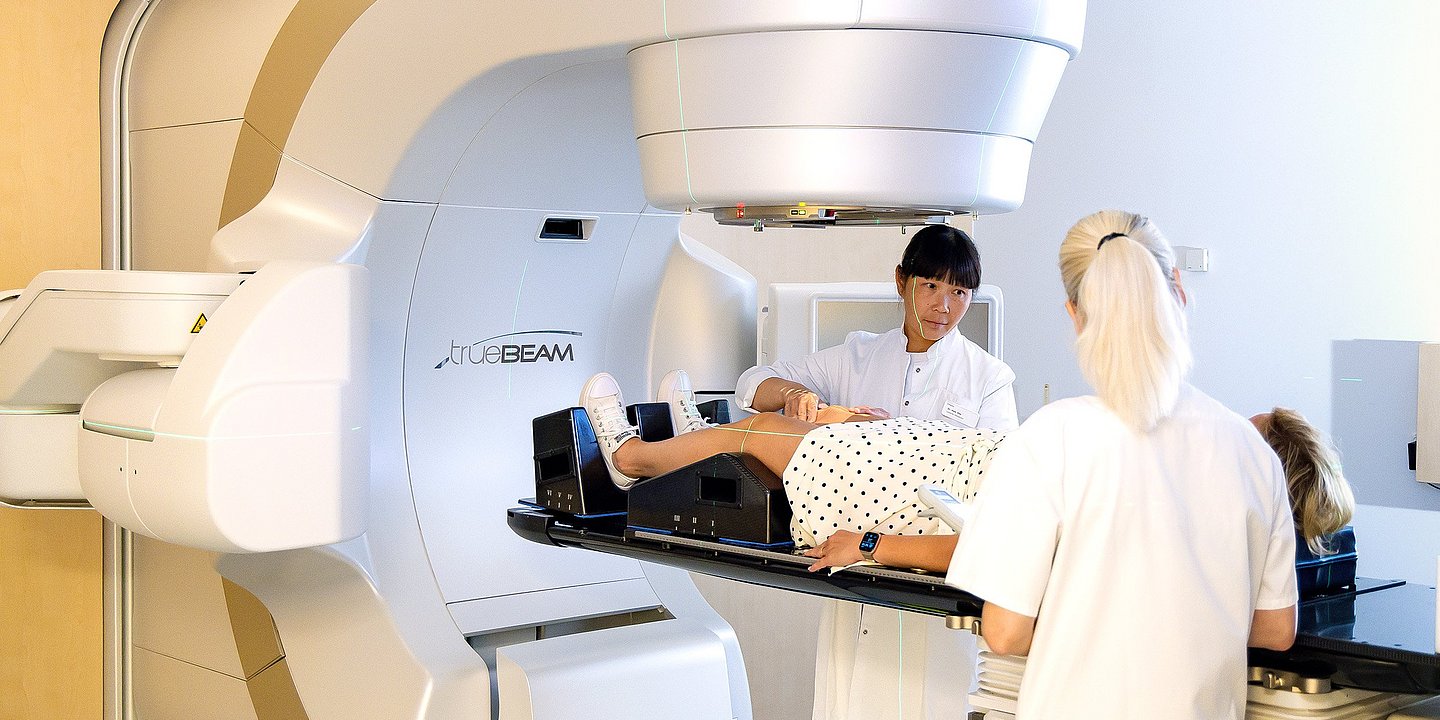
Radiation therapy can directly target affected lymph nodes or other localized sites of disease. It may be used as a standalone treatment for certain localized forms of lymphoma, although it is more commonly part of a combined treatment strategy.
In early-stage Hodgkin lymphoma, radiation therapy may complement systemic treatment. It is also used for certain localized non-Hodgkin lymphomas, residual or recurrent lesions, and for palliative purposes to reduce tumor burden and relieve associated symptoms.
Modern treatment planning makes it possible to precisely define the radiation field while limiting the dose received by surrounding healthy tissues. This is particularly important in lymphoma, as many patients have a good chance of long-term remission and the potential long-term effects of treatment must therefore be considered.
High-dose chemotherapy with stem cell transplantation
For certain aggressive, relapsed, or treatment-resistant lymphomas, high-dose chemotherapy followed by hematopoietic stem cell transplantation may be considered.
In an autologous transplant, the patient’s own stem cells are collected and stored in advance. High-dose therapy is then administered, after which the stem cells are returned to the patient to restore blood cell production. This approach is used, for example, in selected patients with relapsed aggressive non-Hodgkin lymphoma or Hodgkin lymphoma.
In certain situations, an allogeneic transplant may be performed using stem cells from a suitable donor. In addition to restoring blood formation, the donor’s immune cells can provide an additional antitumor effect.
One of the specialized Helios centers in this field is Helios Hospital Berlin-Buch. Its Department of Hematology and Cellular Therapy performs both autologous and allogeneic stem cell transplants and specializes in treating patients with non-Hodgkin and Hodgkin lymphomas. High-dose therapy with autologous stem cell transplantation is also a major area of hematological expertise at Helios Dr. Horst Schmidt Hospital Wiesbaden.
CAR T-cell therapy
One of the most innovative treatments for certain lymphomas is CAR T-cell therapy. The patient’s own T cells are collected from the blood and genetically modified in a laboratory so that they can recognize a specific antigen on cancer cells. After the patient has been prepared for treatment, the modified cells are infused back into the body, where they can identify and destroy lymphoma cells.
CAR T-cell therapy is primarily used for certain aggressive B-cell lymphomas that have not responded to previous treatment or have relapsed. Depending on the specific product and clinical situation, it may also be used for other B-cell lymphomas, including mantle cell lymphoma.
Helios Hospital Berlin-Buch has particular expertise in cellular therapy. CAR T-cell therapy is used there for conditions including aggressive B-cell and mantle cell lymphomas. Specialists at the center are also investigating the use of CAR T cells in lymphomas involving the central nervous system.
Bispecific antibodies
One of the modern approaches to lymphoma immunotherapy involves bispecific antibodies. Unlike conventional monoclonal antibodies, they can recognize two different targets simultaneously. In the treatment of B-cell lymphomas, one part of the antibody typically binds to the CD20 protein on the malignant B cell, while the other binds to CD3 on a T cell. In this way, the drug brings the immune cell into close contact with the cancer cell and activates the T cell to destroy the lymphoma cell.
This group includes epcoritamab, glofitamab, and mosunetuzumab. Depending on the specific drug and clinical situation, bispecific antibodies are used for certain relapsed or refractory B-cell lymphomas, including diffuse large B-cell lymphoma (DLBCL) and follicular lymphoma. Their role continues to expand, and drugs in this class are also being investigated in earlier lines of treatment and in combination with other anticancer therapies.
An important advantage of bispecific antibodies is that they are ready-to-use medicines. Unlike CAR T-cell therapy, treatment does not require the patient’s T cells to be collected and genetically modified in a laboratory beforehand. This can allow treatment to begin more quickly and makes bispecific antibodies a potential option for some patients who are not suitable candidates for CAR T-cell therapy or whose disease has progressed after previous treatment. The choice between these approaches depends on the type of lymphoma, previous therapies, the patient’s overall condition, and other clinical factors.
Because bispecific antibodies strongly activate the immune system, treatment requires specialized monitoring. One characteristic complication is cytokine release syndrome (CRS), which can cause fever, low blood pressure, and other systemic reactions. Low blood cell counts and infections may also occur. To reduce the risk of severe reactions, some bispecific antibodies are administered using a step-up dosing schedule, with the dose gradually increased.
Helios Hospital Berlin-Buch has experience with modern cellular and immune therapies for lymphoma and participates in international clinical trials investigating new treatment approaches. The center’s research programs include bispecific antibodies such as epcoritamab and mosunetuzumab, as well as CAR T-cell therapy and new combinations of immune and targeted therapies.
Helios expertise in lymphoma treatment
Lymphoma treatment at Helios combines the expertise of specialized hematology, advanced molecular diagnostics, cellular therapy, stem cell transplantation, radiation therapy, and clinical research. Through its network of major oncology and hematology centers, Helios provides treatment for both common and rare or complex forms of lymphoma — from initial diagnosis to the management of relapsed and refractory disease.
A key advantage is precise diagnosis and personalized treatment. Morphological, immunological, cytogenetic, and molecular genetic testing is used to determine the exact lymphoma subtype. Diagnostic findings and treatment options are reviewed by multidisciplinary teams, with treatment decisions taking into account not only the type and stage of lymphoma but also the biological characteristics of the tumor, previous therapies, and the patient’s overall health.
The Helios network makes it possible to select a center according to the specific clinical challenge — whether this involves confirming a complex diagnosis, first-line lymphoma treatment, high-dose therapy and stem cell transplantation, treatment of recurrent disease, CAR T-cell therapy, or access to new drugs through clinical trials. This approach is particularly important in lymphoma, as the optimal treatment strategy is determined not only by the stage of the disease, but above all by its exact biological subtype and response to previous therapy.
If you are interested in arranging diagnosis or treatment at one of the Helios hospitals, you can submit a request using the contact form on our website or contact us via the email address provided at the top of the website.
Learn more about arranging treatment at Helios hospitals ⟶
Do you need more information about Helios Hospitals or want to schedule your treatment?