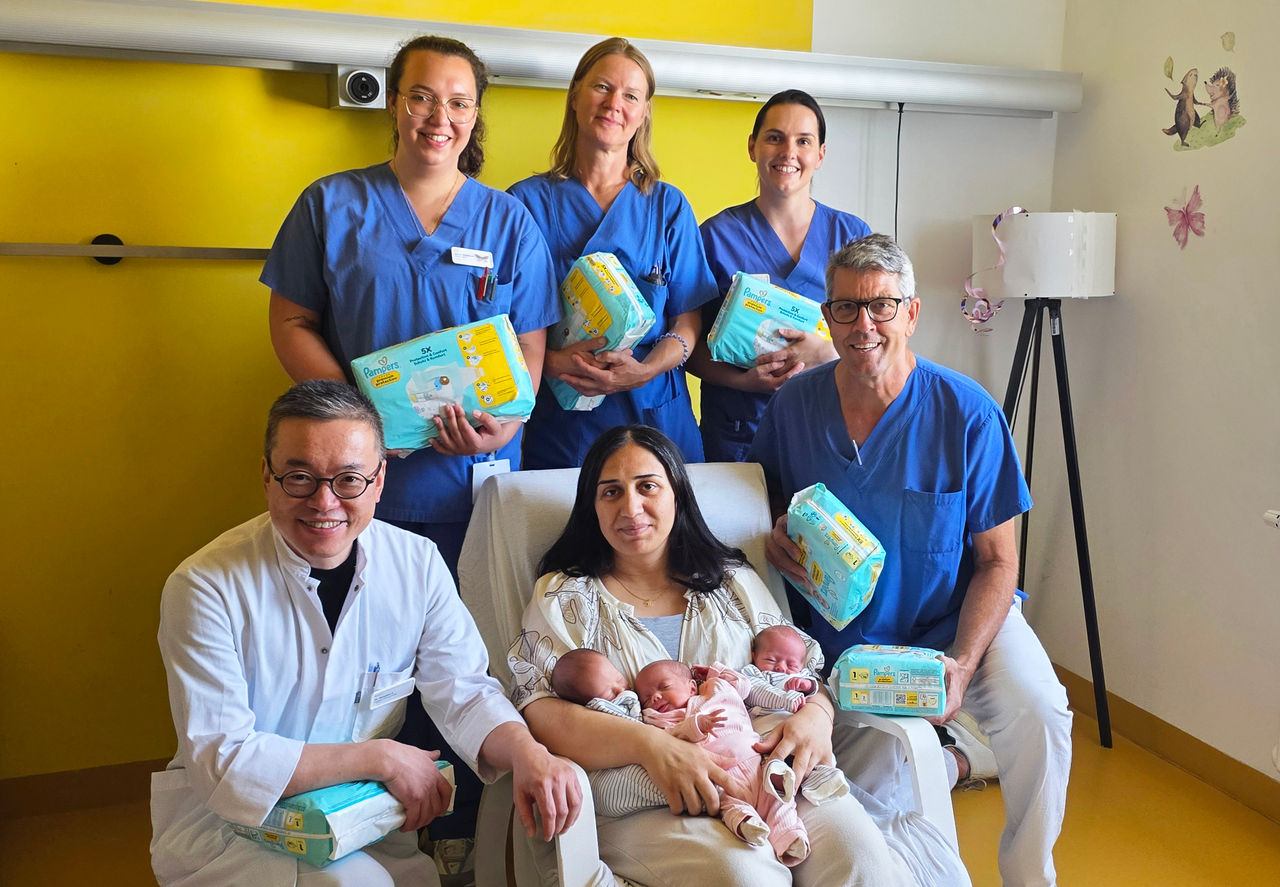
Triple joy: Premature triplets successfully discharged home
From as early as the 12th week of pregnancy, the gynecology team at Helios Hospital Pforzheim provided care for the expectant mother due to her multiple pregnancy. Through regular check-ups, the physicians monitored the entire course of the pregnancy and were able to prepare at an early stage for the special requirements associated with the birth of triplets. “Close monitoring of high-risk pregnancies in the weeks leading up to birth is a key factor in ensuring the health of both mother and babies. That is why we involved our neonatologists — specialists in newborn medicine — from the very beginning, allowing us to prepare for the delivery as effectively as possible and provide our smallest patients with the best possible care from the very first moment,” emphasizes Dr. Shaojian Ji, Head of Obstetrics and Gynecology.
The triplets were born well before their expected due date. Immediately after birth, they required specialized care, including respiratory support and intravenous nutrition — treatment that can only be provided at perinatal centers offering the highest level of care (Level 1 centers).
At the modern pediatric intensive care unit at Helios Hospital in Pforzheim, an experienced neonatal team is available around the clock, including neonatologists, pediatric intensive care specialists, specially trained nursing staff, and therapists. The team cares for premature babies born from as early as the 22nd week of pregnancy, some weighing less than 500 grams at birth. Standardized procedures and close collaboration among all the necessary medical specialties allow complications to be identified at an early stage, giving even extremely premature newborns the best possible chances of survival and healthy development.
A particular advantage is the pediatric surgery department directly connected to the children’s hospital, which significantly expands the capabilities of the perinatal center. Premature and newborn babies with congenital malformations — for example, of the esophagus, gastrointestinal tract, or abdominal wall — can undergo surgery directly on site. Most recently, this made it possible to successfully perform intestinal surgery on a premature baby weighing just 600 grams. “Especially when treating premature and newborn babies, short distances and close coordination between neonatology and pediatric surgery are crucial. Because diagnostics, intensive care, and surgical treatment are all available at a single location, we can treat our smallest patients particularly quickly and gently,” explains Dr. Thomas Ringle, Head of Pediatric Surgery.
For families, having comprehensive care from a single medical center is a major advantage: stressful transfers to other hospitals can usually be avoided. Parents can visit their children every day, take an active role in their care, and experience important developmental milestones firsthand. This closeness is particularly important for premature babies who often spend several months in the hospital, as it strengthens the parent-child bond and has been shown to support the children’s development.
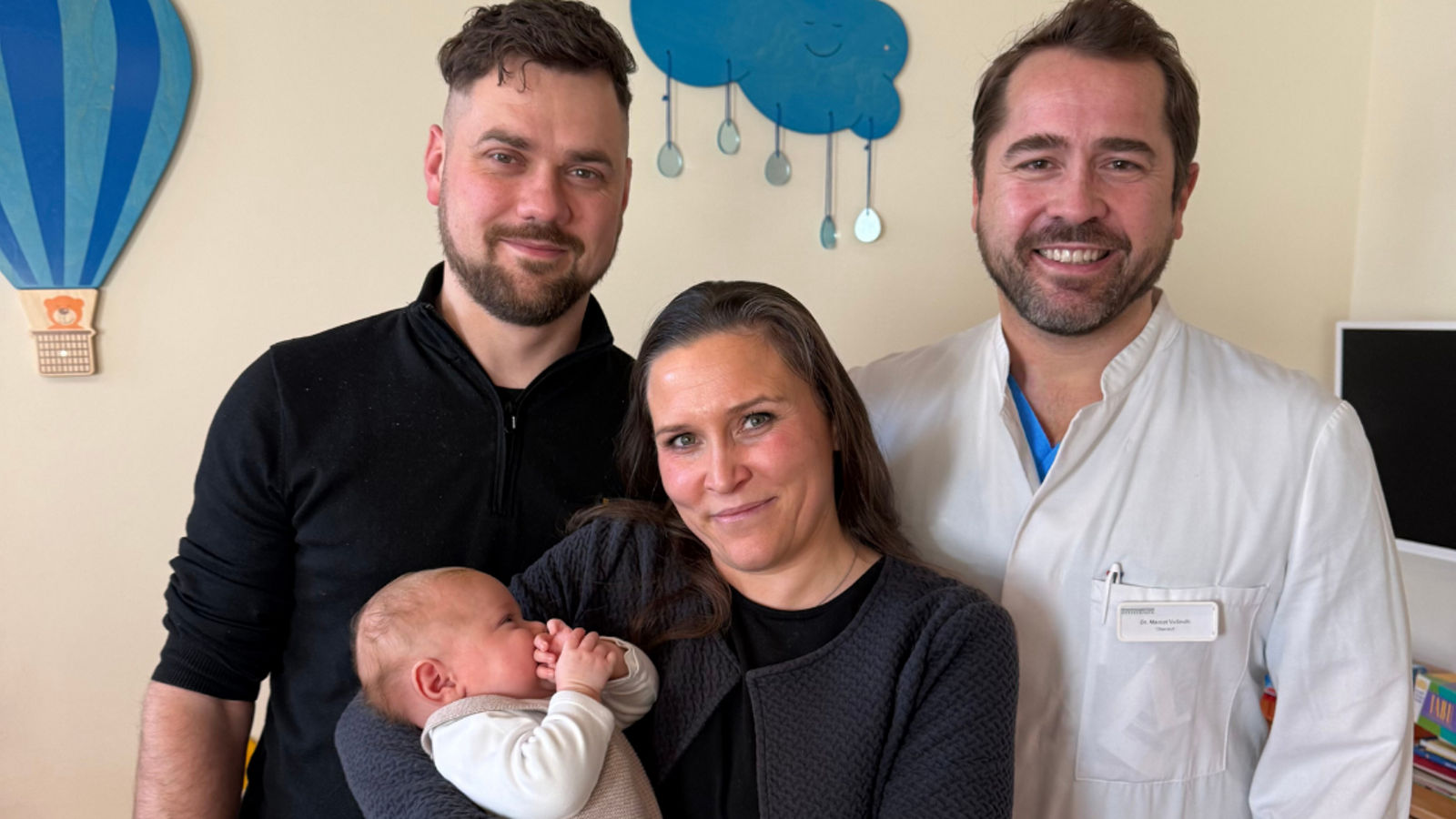
The new mother of the triplets had the same experience: “I could visit my children at any time. I was often with them until late at night and then back again first thing the next morning. The long visiting hours allowed me to spend as much time as possible with my little ones and breastfeed them myself.” With a smile, she adds: “Of course, not all three at the same time, but being able to breastfeed and also pump milk was the perfect combination to make sure they all received the amount they needed each day.”
The fact that the triplets were able to go home healthy after several weeks is a special achievement for the team, even though caring for the smallest premature babies is part of their everyday work. Dr. Kai Siedler, Head of Neonatology, adds:
“When we are able to send children like Ayas, Reivin, and Hanas home healthy to their families after such a difficult start in life, it both motivates us and confirms that our careful medical support — from pregnancy and birth through the first days of life and well beyond — truly makes a difference.”
As a farewell gift, the team at Helios Hospital Pforzheim presented the parents with 1,000 diapers. With triplets, the number of diapers needed during the first few months of life is enormous. This small gift is intended to provide some practical support as the family begins life at home and to express the team’s continued connection with their little patients beyond their hospital stay.
Read more:
Do you need more information about Helios Hospitals or want to schedule your treatment?