Successful removal of a rare malignant spinal tumor
Daniela J. describes her symptoms as “pain from zero to one hundred.” What initially felt like a pinched nerve in March 2024 quickly developed into an unbearable, constant condition. “My youngest daughter was just under 15 months old at the time,” recalls the mother of nine. “I had to function — for her and for my other children. But the pain grew worse day by day. I could no longer stand, walk, or drive, and I collapsed several times.”
After a few days, the then 42-year-old presented to the emergency department in her hometown, where she was treated with pain medication. Due to suspected disc herniation, her general practitioner additionally ordered an MRI scan. “After nine pregnancies and the physical strain of my daily life, that seemed plausible,” Daniela J. says.
Even before the MRI results reached her physician, she and her husband reviewed the images on the CD routinely provided to patients after an MRI. “Even as complete laypeople, we immediately knew from the images that something was wrong. It’s a feeling I wouldn’t wish on anyone,” she recalls.
Successful surgeries in Helios Hospital
Once Daniela J.’s MRI was fully evaluated, she was immediately referred to a hospital. She chose Helios Hospital, where further diagnostic procedures were initiated without delay. “On site, I underwent another MRI, a CT scan, and two biopsies. I was sent home in between, but because of the pain, I couldn’t tolerate being there either,” she remembers. After a second biopsy, and another three days later, the diagnosis was confirmed: cancer — more precisely, a chordoma.
Chordoma is diagnosed in only 1 out of 1,000,000 people per year and arises from remnants of the notochord. “The notochord is an elastic supporting structure that forms during early embryonic development. As the embryo grows, the spine assumes the supporting function, and the notochord largely regresses. However, small remnants remain as gelatinous material within the intervertebral discs. Because chordoma originates from these remnants, its source lies within the spine. It is a malignant tumor that aggressively infiltrates surrounding tissue and can also form metastases,” explains Professor Dr. med. Yu-Mi Ryang. Chordomas can occur along the entire length of the spine, with approximately 50 % developing at the lower end near the coccyx and around 30 % at the skull base.
In total, two operations were performed to remove the tumor. During the first procedure, a titanium framework was implanted in Daniela J.’s spine. In a second operation, the specialist team performed an en bloc spondylectomy of L3, removing the entire vertebral body along with the complete tumor and surrounding structures, including the intervertebral discs. This is an extremely complex and high-risk procedure that is offered and performed in only a few clinics worldwide.
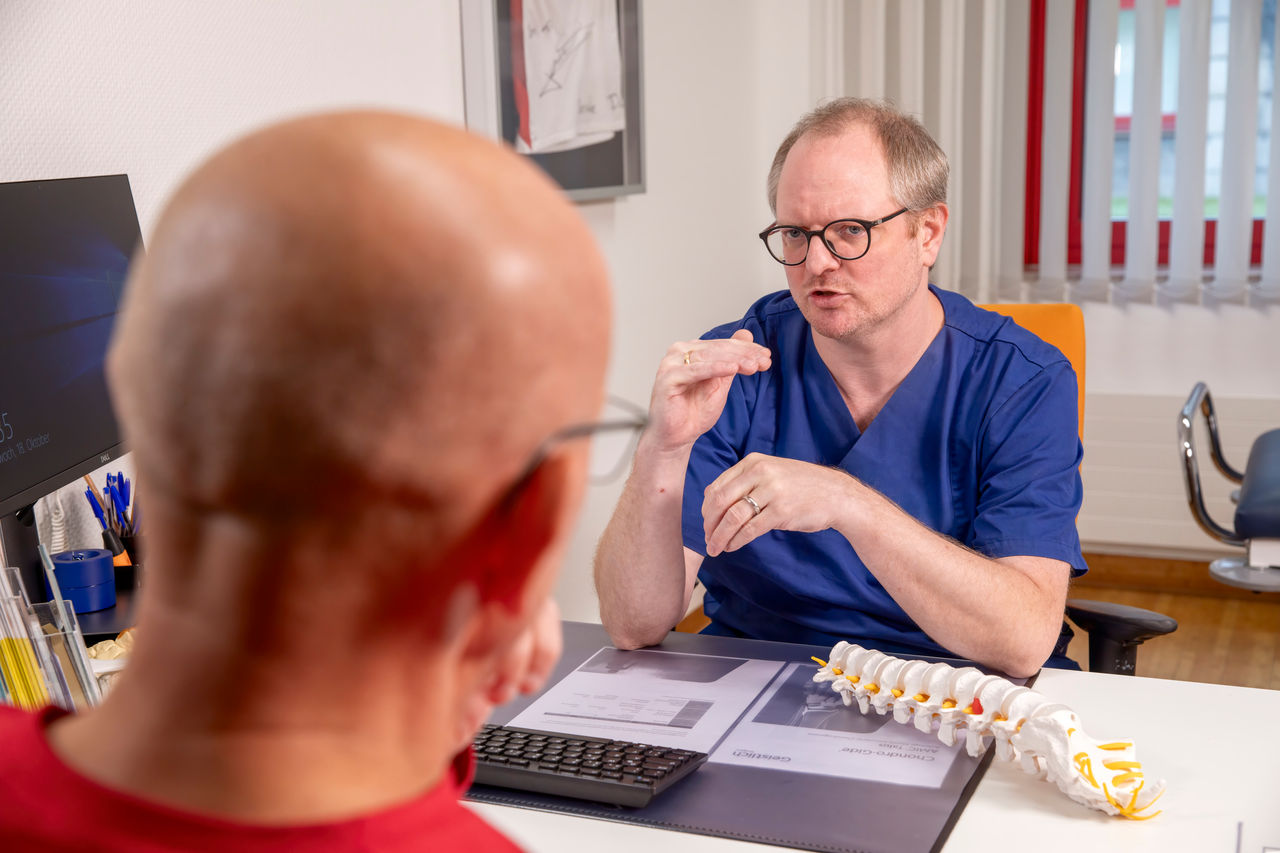
Professor Ryang explains: “Chordoma is not only a very rare tumor, but also particularly challenging to treat because it affects vital structures such as the brainstem, spinal cord, as well as major nerves and arteries. Patients should therefore seek care at a specialized spine surgery center with sufficient experience in treating this condition. Our goal was to achieve tumor-free margins while preserving spinal stability. We succeeded, and I am very pleased to see that the patient has recovered well so far.”
Returning to everyday life after spinal cancer
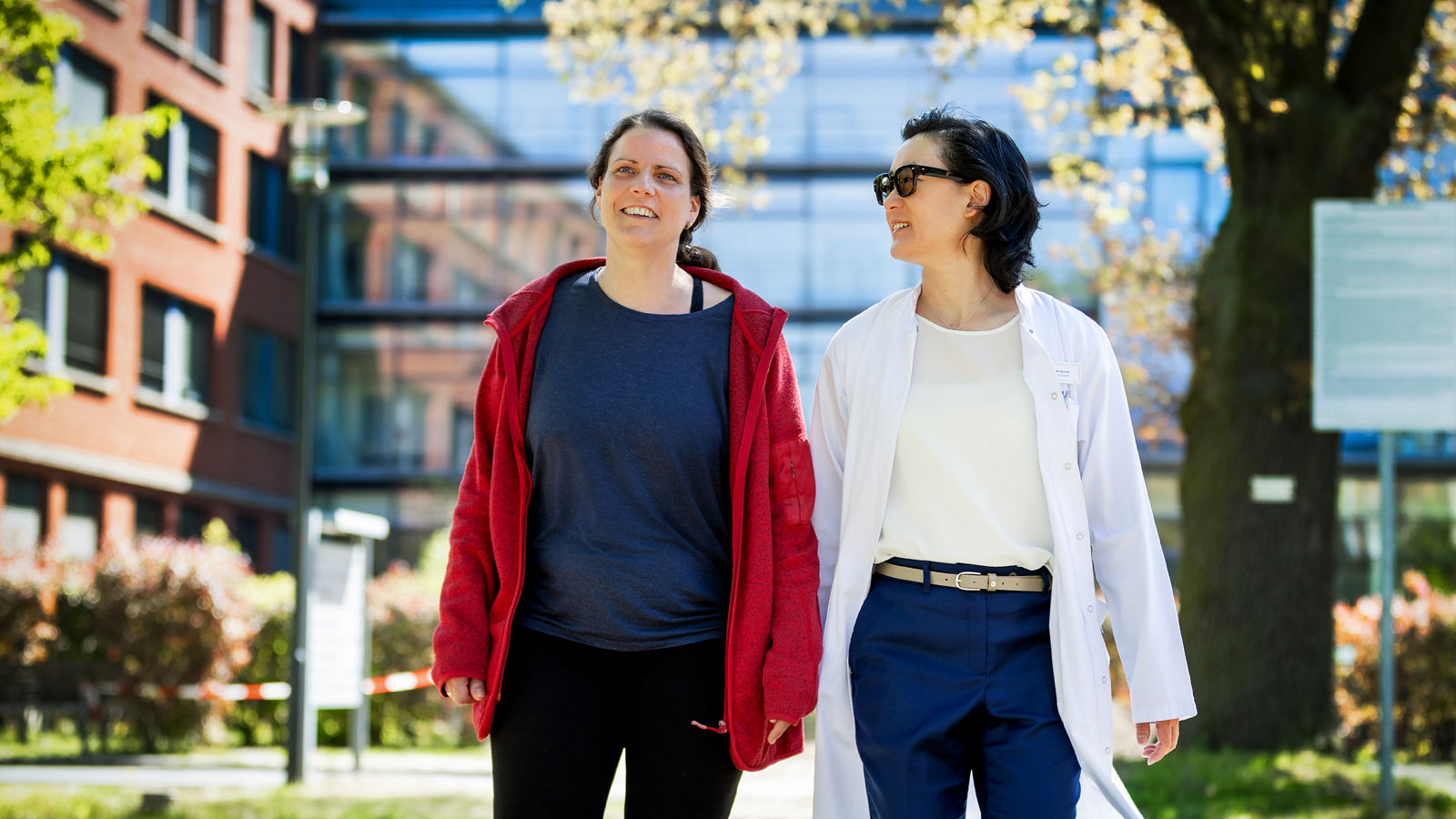
By now, Daniela J. has gradually adapted to her new daily life. She struggled for a long time with severe iron deficiency, can walk only short distances, and experiences pain when sitting or walking for extended periods. Follow-up examinations at the Helios Hospital Berlin-Buch are scheduled every three months — for at least three years.
But she is alive — and aware of it: “I am a rarity among rarities, like a miracle, and I have been incredibly lucky.” Prior to the surgeries, the specialists were unable to predict her postoperative physical condition or whether she might suffer severe paralysis of the legs or even complete paraplegia. Ultimately, none of the bleak prognoses came true. Despite the necessary removal of several affected nerve roots, none of the feared paralyses occurred.
When she thinks about the future, she has only one major wish: “I want to see my children grow up.” A wish that, hopefully, will come true.
Read more:
Do you need more information about Helios Hospitals or want to schedule your treatment?