Helios St. Johannes Duisburg: Patient on the verge of a rare intestinal infarction
Statistically speaking, it only affects three out of every 100,000 people in Germany. But for those who do, it can end fatally: An intestinal infarction is a very rare but particularly fatal disease. The blood supply to the digestive system is interrupted by a suddenly blocked vessel. Only 30 percent of those affected survive. It could have ended like this for Cornelia Picker too. The 64-year-old from Duisburg had just undergone routine surgery on her thigh at the beginning of January when diarrhea began two days after she was discharged from hospital. "At first I thought it was the after-effects of the operation or anesthetic, but it just wouldn't stop," she recalls. She went to her GP and took numerous medications in consultation, ate only small portions and cut out certain foods. "I really tried everything, but it only got a little better, if at all." In the morning it is usually calm before the storm, Cornelia Picker has a small breakfast and can manage her everyday life to some extent with slight restrictions, but the symptoms start after lunch at the latest and especially at night. Her lower abdomen ached and rumbled and then came the diarrhea, often lasting several hours. "Sleep was almost unthinkable. Only when everything was out did I feel better." These symptoms lasted for weeks, sometimes more, sometimes less severe. In between, only painkillers keep the pensioner going. She no longer leaves the house, loses almost 10 kilos, is overtired and completely exhausted, and can't even be there for her two grandchildren. Her husband takes care of everything for the trained photo lab technician during these weeks, looks after her around the clock, does the shopping and manages the household. "I couldn't have done it without him." Her husband finally drives her to the emergency room at Helios St. Johannes Clinic shortly before Easter at the end of March when the pain becomes unbearable.
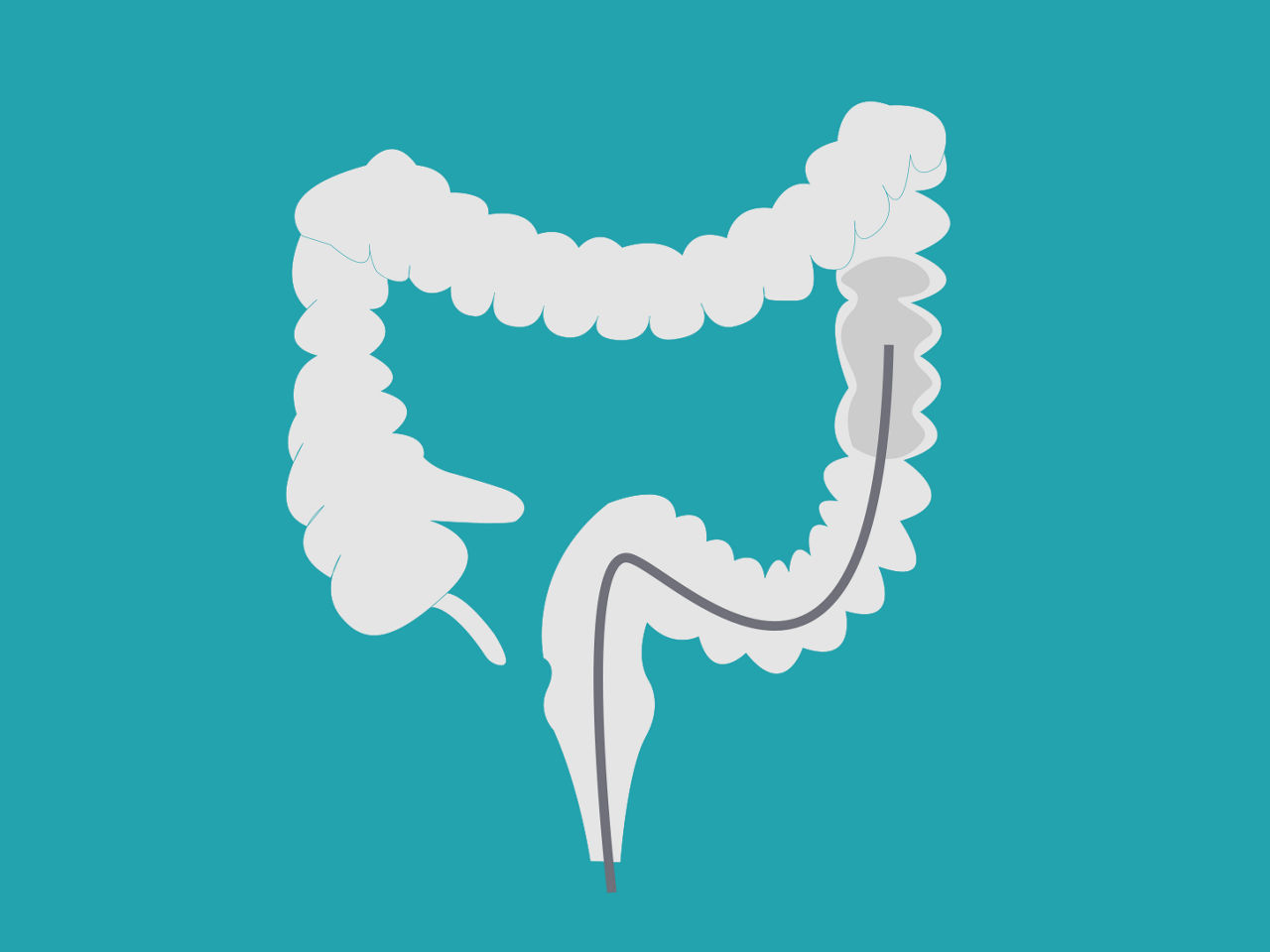
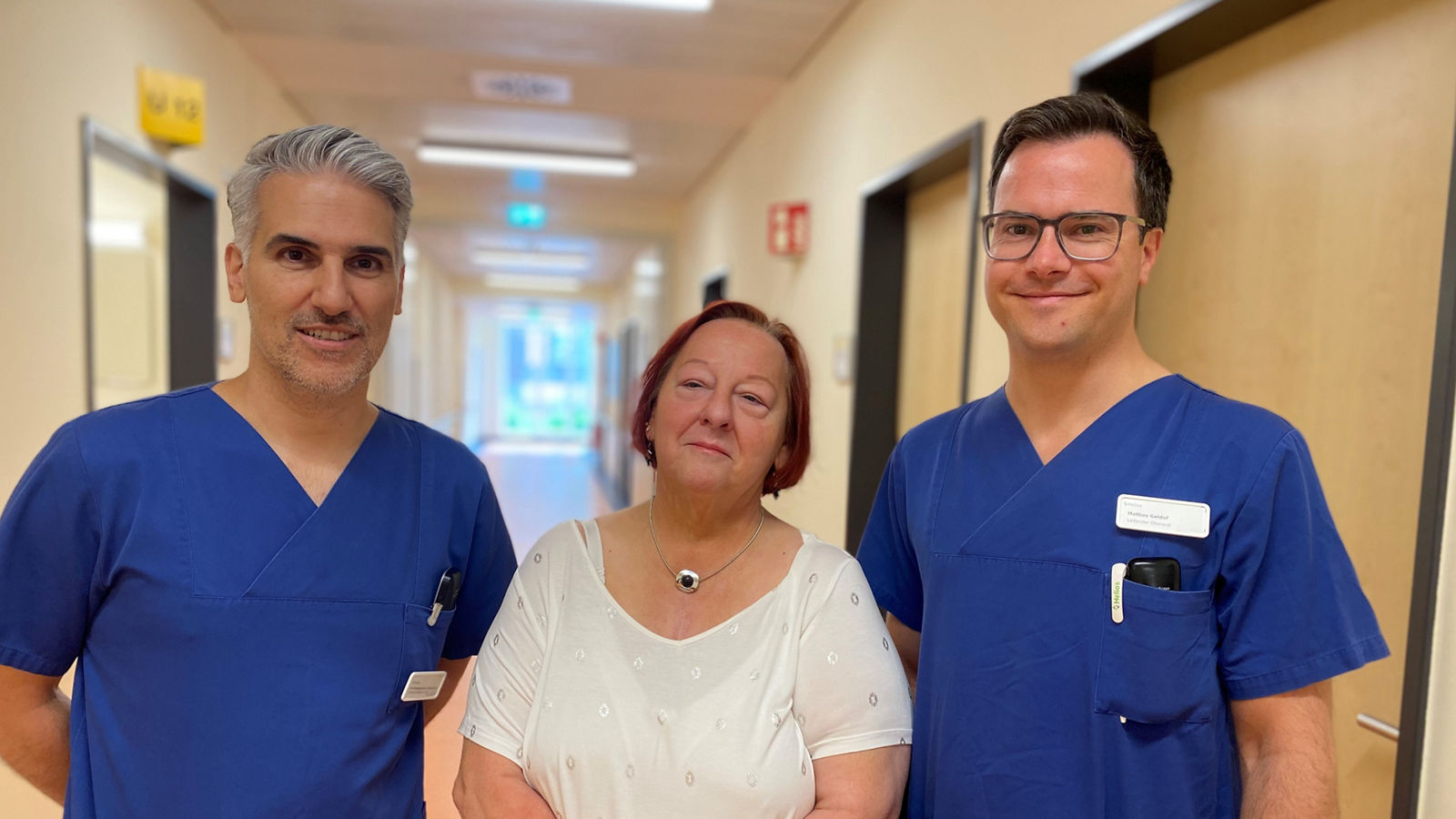
There she is admitted to the gastroenterology ward, which specializes in gastrointestinal diseases. In the days that followed, the doctors turned Cornelia Picker upside down and ordered numerous examinations. A computer tomography (CT) scan with contrast medium was also carried out. And finally, the cause of her suffering was revealed deep down: one of the two large intestinal arteries was about to become blocked. This means that parts of her digestive system are only receiving a minimal supply of oxygen. Occlusion of the artery - and therefore an intestinal infarction - is only a matter of time. The attending physicians call in the colleagues from the in-house vascular surgery department, who take over the patient directly and initiate minimally invasive treatment: a catheter procedure in which a stent is inserted into the affected vessel to restore blood flow. "It's actually a well-known routine procedure on the heart or for stenoses in the leg arteries. But it is rather rare in the intestine," explains Dr. Konstantinos Meletiadis, Head Physician of the Vascular Surgery Department in Hamborn. "Fortunately, however, the rarity of the disease did not make the resulting procedure any more complicated, because the intestinal vessel is ultimately a vessel too and we know our way around that," explains the experienced surgeon. For Cornelia Picker, it is the best possible news and her relief is immense when her attending physician, the department's senior consultant Mattias Geldof, can finally tell her where the pain and diarrhea are coming from and that there is a treatment option. "So many stones fell from my heart at that moment," she remembers, "because there was legitimate hope that this procedure would give me my life back." The surgery was scheduled shortly after the diagnosis. The procedure doesn't take long, the vascular surgeons place a stent in the affected artery with millimeter precision. Immediately the blood flows again as it should, the bowel is adequately supplied, it's done.
Cornelia Picker also feels this after shaking off the anesthetic residue: "I was almost a little nervous during the first small meal." But there was no pain and the diarrhea did not return. "I'm so incredibly grateful to everyone here at the clinic, especially for the way they took such good care of me and thought outside the box." She is referring to the teamwork within the clinic, as it was only because the gastroenterology department directly involved her colleagues in vascular surgery that she was able to be helped so quickly. This is an important building block within hospitals, from which the colleagues themselves, but above all the patients, benefit. Head Physician Konstantinos Meletiadis is also aware of this: "The bundled knowledge that we have here across the specialist departments is one of the best 'medicines' we have. Because everything in our body is connected, as you can see very clearly in Ms. Picker's case."
What exactly caused the pensioner's circulatory disorder cannot be clearly explained; she had already struggled with deposits in her arteries in the past and her diabetes may also have played a role, as this increases the risk of vascular damage. It is now important that the blood flow to the bowel is checked regularly on an outpatient basis, then there is a good chance that the disease will not return. For Cornelia Picker, this is a must: "I'd rather have one more appointment than one too few. I don't want to go through this ordeal again."
What exactly is an intestinal infection?
An intestinal infarction, also known as a mesenteric infarction, is a rare but serious disease in which the blood supply to part of the intestine is completely interrupted in an acute case. As a result, the affected section of the intestine dies within a very short time. The main causes are arterial or venous circulatory disorders. They can be caused by blood clots (thromboses) or embolisms (carry-over of blood clots). The main risk factors are atherosclerosis (hardening of the arteries), cardiac arrhythmia (e.g. atrial fibrillation) and venous occlusion.
The symptoms of an intestinal infarction are usually sudden and severe, but in very rare cases they can also develop over a longer period of time, for example when the artery is just beginning to clog. They are characterized by severe abdominal pain, nausea, vomiting, diarrhoea and possibly bloody stools. As the symptoms are unspecific, the diagnosis is often made late, which worsens the prognosis.
The treatment of an intestinal infarction requires immediate medical intervention. Initially, attempts are often made to restore blood flow using medication or minimally invasive procedures (e.g. catheterization). In severe cases, such as when tissue necrosis (death) has already begun, surgical removal of the affected section of bowel is necessary. Early treatment can save lives and prevent serious complications.
Read more:
Do you need more information about Helios Hospitals or want to schedule your treatment?